MR. ROOF INC / Windows
Window Leaks During Rain in Warwick, RI: Finding the Cause
Water on a sill needs investigation. See how Warwick homeowners can document rain leaks and discuss window drainage, wall flashing and the scope of replacement.
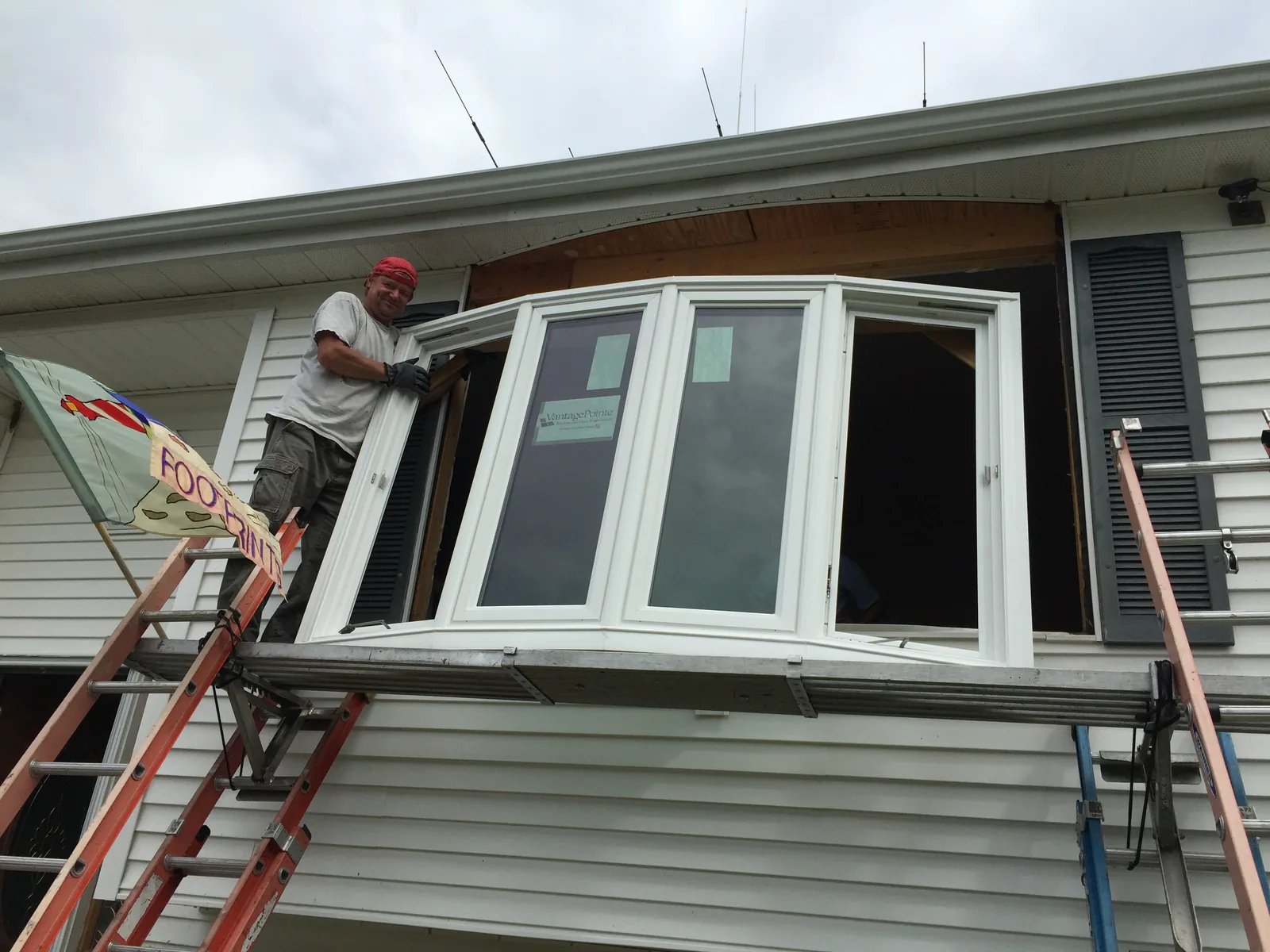
A wet windowsill after rain does not tell you whether the problem is the window, the installation around it or water arriving from the wall above. Ordering a replacement before answering that question can leave an important part of the problem outside the project.
For Warwick homeowners, the first goal is to identify how water reaches the room. This guide explains what to record, how window drainage differs from a wall leak, and why an insert replacement and a full-frame installation may address different parts of the opening.
Describe the water, not just “a leaking window”
Photograph the first wet location before wiping it, then dry accessible surfaces. Note whether water appears in the window track, along a frame corner, beneath interior trim or on the wall above. Record the time, rainfall and which windows are affected. Tell the contractor whether the unit was fully closed and locked.
Also identify what you mean by moisture. Droplets on the room-facing glass, persistent haze between panes and liquid entering during rain are different symptoms. They should not all receive the same repair recommendation. If you cannot tell which surface is wet, include that uncertainty in your notes.
Find the manufacturer’s identification label if accessible and photograph it. Andersen’s care and maintenance information explains that its product labels help identify a unit for service. Follow the equivalent guidance for your window brand.
Understand the window’s own drainage system
Some window designs collect incidental water in an exterior sill or track and release it through drainage openings. Andersen notes that its products with drainage systems can hold water temporarily during heavy rain. Water in an intended drainage area is different from water crossing into the room or wetting the wall.
Ask which openings belong to your product’s drainage system and how they should be maintained. Do not drill new holes or fill existing openings with caulk based on a generic online diagram. Check the exact manufacturer’s instructions. If pooling persists or water enters the room, document it and request service rather than assuming it is normal.
Have the assessment include the surrounding wall
A window sits within a larger assembly. The frame, exterior trim, flashing and wall barrier need to work together. An inspection should consider the window itself and the interfaces around it, including relevant details above the visible wet area.
PNNL’s window rehabilitation guidance begins with identifying air and water pathways before choosing a treatment. Ask the contractor which pathway the evidence supports and whether a damaged component, failed connection or concealed wall condition needs further examination.
A controlled investigation may require removing trim or another limited area. Have that work agreed in advance, including how openings will be protected and restored. Avoid experimenting with a pressure washer or spraying every joint at once; that can make the observations harder to interpret and may conflict with product care guidance.
Compare an insert with a full-frame scope
An insert replacement retains the existing window frame. It may suit a sound frame with appropriate existing connections, but retaining the frame also limits access to some concealed details. Ask what the installer can establish about the retained sill, surrounding materials and drainage path.
A full-frame replacement removes the existing frame back to the rough opening. It gives access to that opening, but the proposal still needs to specify how the work will address water management. Full-frame is a description of access and scope, not a guarantee that every wall defect will be corrected.
The DOE window replacement checklist distinguishes retained-frame and full-frame approaches. PNNL’s complete replacement guide also discusses connecting new work to existing wall layers. Ask what happens if there is no sound barrier to connect to, and whether adjacent siding needs to be opened.
Ask where water would go if it passed the outer joint
This question makes an installation discussion concrete. A sill pan or compatible flashing system protects the opening and directs collected water outward. Side and head flashing need to connect with the wall’s water-control layer in the correct arrangement.
The Department of Energy’s sill-pan explanation shows these relationships. Andersen’s water-control overview likewise describes maintaining a continuous route between the window and wall. These are principles to discuss with the installer; the exact product and wall assembly determine the installation detail.
Air sealing and water drainage also need distinct treatment. A statement that the gap will be insulated does not explain how rainwater will exit. Ask the window replacement contractor to describe both functions in the written scope.
Agree on the finish work and records
Before authorizing work, clarify which interior trim, exterior trim and siding sections are included. State how concealed damage will be photographed and approved, who handles any required permits, and what temporary protection is planned while openings are exposed.
Keep product identification, installation photographs and the actual warranty documents together. Ask who handles a product-service question and who handles an installation concern. At completion, operate the windows with the installer and review the maintenance instructions.
Questions about windows leaking in rain
Will replacing the glass stop rain coming beneath the trim?
Not necessarily. Glass work and the window-to-wall connection are different scopes. Establish the water path first and ask why the proposed repair addresses it.
Is full-frame replacement always necessary after a leak?
No. The condition of the frame, opening and flashing should guide the recommendation. Request an explanation of what can be inspected and corrected with each approach.
What if the leak happens only in wind-driven rain?
Record that pattern and share photographs. It helps define the investigation but does not prove which joint failed. A quiet-day inspection may need additional agreed investigation to establish the cause.
Get help with a Warwick window opening
Contact Mister Roof with your observations and window identification. The Warwick showroom is at 110 Jefferson Blvd, Unit I, Warwick, RI 02888. For broader product and condition questions after the leak assessment, read our window replacement decision guide.