MR. ROOF INC / Roofing
Roof Repair or Replacement in Massachusetts and Rhode Island: How to Decide
Learn when a roof repair deserves consideration, when replacement needs a closer look, and what to ask during a roofing inspection in Massachusetts or Rhode Island.
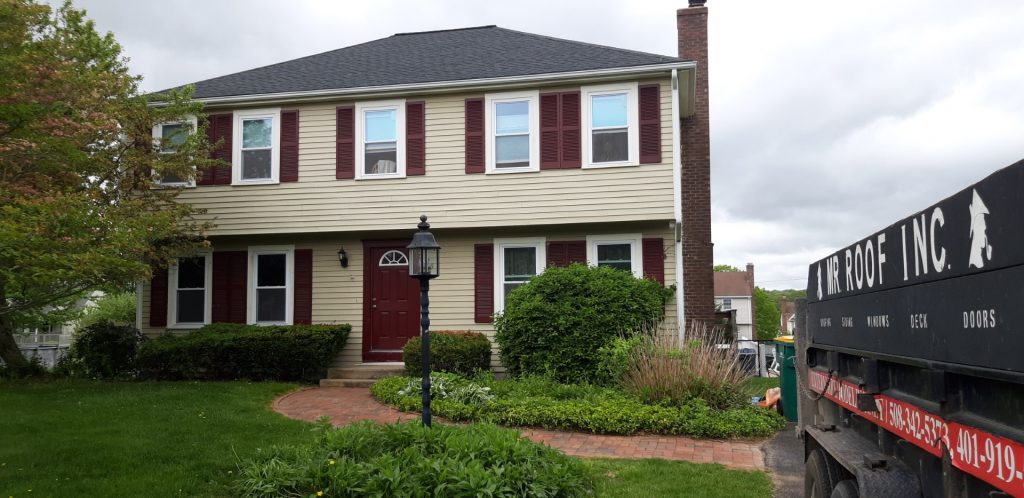
A ceiling stain or a few missing shingles can leave a homeowner wondering whether to repair the roof or replace it. The useful question is how much of the roof has failed, why it failed, and whether a defined repair can address the problem.
For homes in Massachusetts and Rhode Island, that decision should consider the roof covering, flashing, decking and attic conditions together. Age helps explain the history, but it should not be the only reason given for a replacement recommendation.
Start with the cause of the problem
A leak does not identify its own source. Deteriorated flashing at a chimney or skylight, damaged shingles and failures in underlying layers can lead to water entry. GAF’s roof-leak guide describes several different causes that call for different repairs.
Before an appointment, note when the problem appears: during wind-driven rain, after snow melts, or during otherwise dry weather. Save photographs of the stain and record whether it changes. Share earlier repair invoices if you have them. These details help a contractor investigate rather than simply cover the most obvious spot.
Make observations from the ground or safely accessible indoor areas. Leave roof access to the contractor. If a storm has exposed an opening or water is actively entering, ask about storm-damage repair and temporary protection while the permanent scope is assessed.
When a targeted roof repair is worth considering
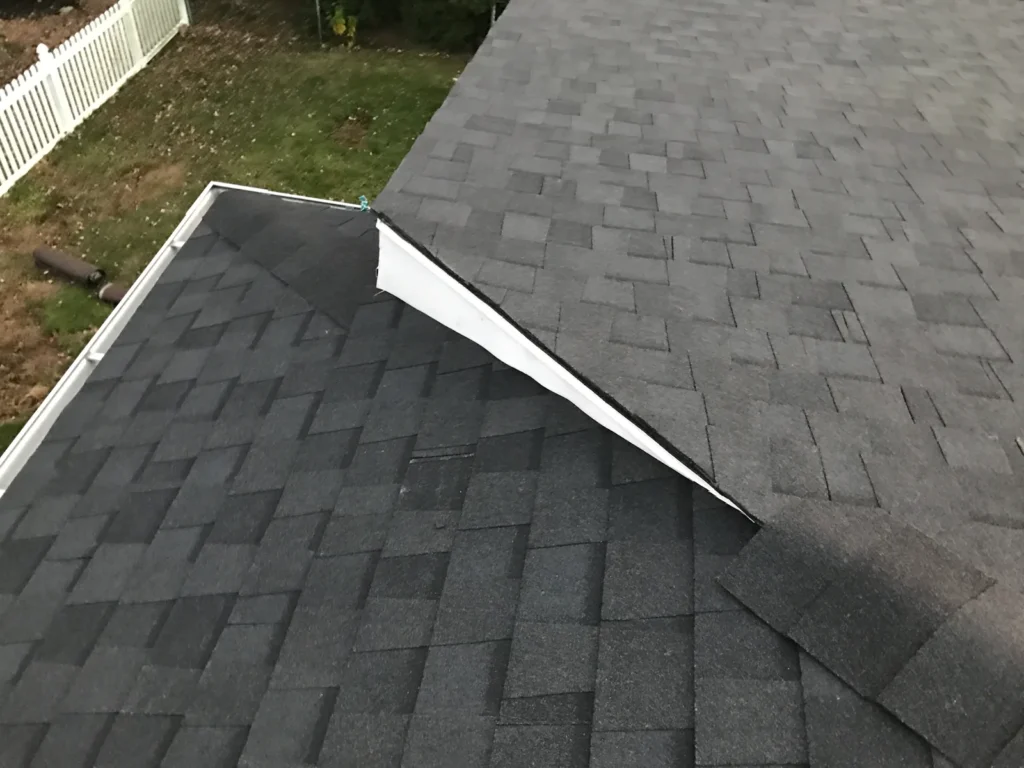
A focused repair deserves consideration when the inspection establishes a limited problem and shows that the surrounding roof can support the work. Examples include an isolated flashing defect or a localized area of damaged shingles. GAF distinguishes limited damage from broader deterioration in its roof-damage guidance.
Ask the contractor to explain:
- The specific source of water entry or damage.
- What materials must be removed and replaced to reach it.
- Whether adjoining shingles can be worked on without creating further damage.
- What the repair addresses and which conditions remain outside its scope.
The condition of the surrounding material matters as much as the size of the visible defect. A matching shingle color is also a separate question from whether a repair can perform properly. Our roof repair service is the appropriate starting point when you need a defined problem evaluated.
When replacement needs a closer look
Replacement becomes a more important option when the concerns extend across several roof areas rather than one repairable detail. Widespread cracking or deterioration, recurring failures in different locations, or underlying damage that cannot be addressed through a limited opening all warrant a broader discussion.
Request photographs and an explanation of the affected areas. If decking damage is suspected, ask what can be established before work starts and what can only be confirmed after removal. The proposal should describe how additional discovered work will be documented and approved.
A roof replacement should have a defined scope beyond the visible shingles. Review the treatment of penetrations, roof-to-wall transitions, underlayment and ventilation before comparing proposals.
Consider attic moisture and winter conditions
Recurring ice at the eaves deserves attention beyond the roof covering. ENERGY STAR explains that air sealing, insulation and appropriate ventilation work together to help keep a vented attic cold in winter and reduce the potential for ice dams. It also cautions against blocking soffit ventilation with insulation.
Ask whether the inspection found blocked airflow paths, indoor exhaust ducts terminating in the attic, or evidence of moisture. An energy assessment may be useful alongside roofing work when air leakage or insulation needs investigation. Simply installing new shingles does not establish that those attic conditions have been corrected. See ENERGY STAR’s attic ventilation guidance for the building-science context.
Ask for an inspection you can understand
A useful roof inspection should leave you with findings, not just a recommended product. Ask the contractor to discuss:
- Roof covering: which slopes show damage and whether it is localized or widespread.
- Water-management details: the condition of flashing, valleys and penetrations.
- Underlying materials: visible moisture or decking concerns and limits of the inspection.
- Attic conditions: relevant ventilation, insulation or exhaust issues.
- Options: the purpose and limitations of a repair compared with replacement.
It is reasonable to ask why a contractor ruled an option out. Request an explanation tied to your roof rather than a general age cutoff or a neighbor’s project.
Compare scope, materials and warranties
If both repair and replacement are practical options, request separate written scopes. Compare what each includes, the areas it covers, how concealed damage will be handled and who coordinates permits and cleanup. Avoid treating two prices as equivalent when one omits details included in the other.
When replacement is proposed, compare the actual roofing system rather than color samples alone. Our roof types guide is a useful introduction before discussing which materials fit your roof’s design.
Ask for the specific manufacturer and contractor warranty documents. Product and workmanship coverage are different; CertainTeed explains this distinction in its roof-warranty overview. Review exclusions, registration or maintenance obligations, and the process for reporting a problem. Our roofing warranties page provides additional company resources.
Common questions
Does one leak mean the entire roof needs replacement?
No. A leak can come from a specific roof detail. The inspection must establish the cause, the extent of damage and whether the surrounding materials allow a durable repair.
Should I replace the roof just because it is old?
Age is useful background, especially when records show earlier work, but ask for evidence of current condition. The recommendation should explain how the findings affect the available options.
Can a new roof stop recurring ice dams?
Do not assume that shingles alone will resolve them. Discuss attic heat loss, insulation, ventilation and roof-edge protection together, with the appropriate roofing and home-energy professionals.
Get a clear recommendation for your home
If you are comparing roof repair and replacement in Massachusetts or Rhode Island, contact Mister Roof to discuss an inspection. Bring your questions, photographs and any previous repair records so the conversation starts with your home’s actual condition.